
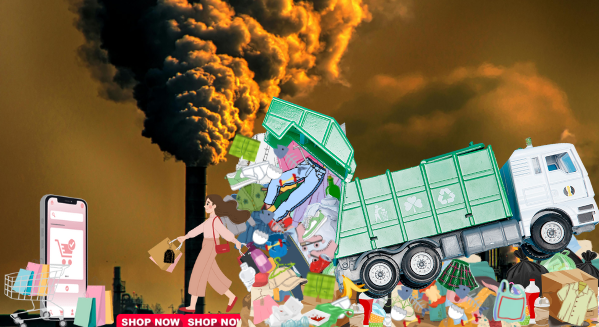
Black Friday is a time of year a lot of people look forward to. It promises extensive savings, deals, and it’s a time to get your holiday shopping out of the way. But how much of what you buy is something you actually need? How many things do you pick up just because of a sticker that says 50% off? Overconsumption is one of the main consequences of Black Friday leading to environmental issues and excessive waste.
Businesses know that slapping on a savings sign makes it more likely someone will buy their product; Black Friday is just a money grab for companies. Most people don’t notice that some companies will inflate their prices weeks before Black Friday so when the time comes, they can bring the prices down and make it appear like things are super cheap. Companies can even inflate the prices so much that you’re paying more for that product than you would have a few months ago.
It’s so easy to get caught up in the sales that we impulsively buy things we do not need. Overconsumption is a serious problem that has detrimental side effects. Perfectly good items end up in landfills or polluting the environment. According to Greenpeace.org, 85% of textiles globally end up in landfills. All of these clothes that end up here release microplastics into the environment as well as chemical pollution.
Along with the waste produced during Black Friday, there’s another culprit that pollutes the environment: Cyber Monday. Just like Black Friday, Cyber Monday is a day that promotes overconsumption and waste, but it also uses shipping. As stated on Quickersameday.co.uk, same day deliveries use transportation that requires mass amounts of fuel that puts more carbon dioxide in the air. The quicker you get your package, especially if it’s overseas, the worse it is for the environment.
It’s okay to take advantage of sales and buy wanted things, but everyone should be aware to think before you purchase something. We should be mindful of what we are spending our money on, where it goes, and what it contributes to.