
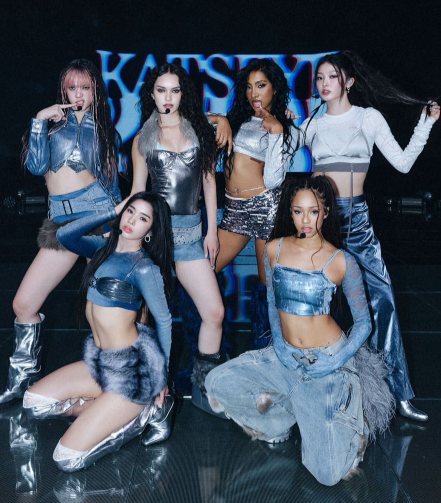
When Geffen Records, the powerhouse behind BTS, and HYBE, announced that they were in the process of creating a global girl group, the world was paying attention. They wanted to bring into being a multi-hyphenate artist, one that would blend K-pop precision with Western grit to address a broader audience. Despite the massive traction KATSEYE has achieved, the group’s rise highlights how diversity and socially conscious branding are used as a product, rather than a genuine effort for change.
This is not denying the impact KATSEYE brings to the table. Members of the group come from rich cultural backgrounds like Korea, Switzerland, Hawaii, and many more. Representation matters, and having a group that is transnational is a huge win in a globalized pop economy. But there is a thin line between representation and corporate co-optation. Diversity here is both the product and the sales pitch. This is not uncommon in the music industry. Groups like Destiny’s Child placed empowering their lyrics and message at the forefront of their music, and the Spice Girls marketed girl power as a social phenomenon. Similarly, KATSEYE employs nostalgia and girlhood as a part of their brand.
Gnarly, their debut single, was initially dismissed as shallow and gimmicky. However, over time, its strangeness grew endearing. Their fans learned to embrace its peculiarity in defying being contained within genre boundaries. This was not a mistake, but an intentional risk so that the audience would learn to embrace disruption after it had been repackaged as innovation. Gnarly’s success revealed KATSEYE’s greatest strength: they know how to take their place in the cultural discourse.
The same logic went into their GAP denim commercial with the iconic 2000’s song “Milkshake.” Coming not long after Sydney Sweeney’s viral American Eagle commercial, the commercial was not just one for jeans. It was one for timing, irony, and culture references, a move to place KATSEYE at the center of online discussion. By doing so, they were not purely selling music or fashion but selling a type of world cool, founded upon diversity and progressivist attitudes. It panders to this side of the political world to gain profit and recognition.
The most compelling feature of KATSEYE is their dynamic. As Lara Raj explained to Rolling Stone, “This isn’t something you could manufacture or develop. It’s a genuine friendship with a deep bond.” That authenticity is one that stands out in an industry where even originality can be faked. Millions of fans tune into livestreams and behind the scenes videos, not just for the music, but to witness their playful shenanigans.
KATSEYE is the promise and pitfalls of pop music today. They are proof that representation is highly desired and marketable to a global audience. When pursued with genuine interest and passion, this can connect to millions of people all over the world. Ultimately, their success should not hinge on serving as vessels for corporate self, but as artists who have the freedom to make their own image.